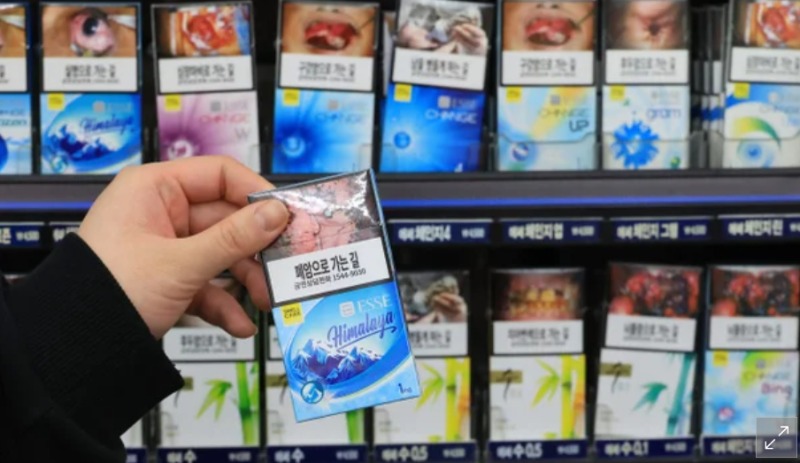
According to industry sources on the 20th, the Ministry of Food and Drug Safety will disclose the results of harmful ingredient analysis of domestic distributed smoking products in October in accordance with the 'Act on the Control of the Harmful Effects of Smoking' (Smoking Hazard Control Act). This is the first time the government has reviewed and disclosed the results of harmful ingredient tests for each product. Heated tobacco and heated tobacco-type electronic cigarettes have 44 types of harmful ingredient tests, including nicotine, tar, carbon monoxide, and lead, while liquid-type electronic cigarettes have 20 types including nicotine and formaldehyde . They have been included in the list of items. Manufacturers and importers must request item-specific inspections from agencies designated by the Ministry of Food and Drug Safety and submit the results to the Ministry. Based on the submitted data, the Ministry will review and approve the Smoking Hazard Management Policy Committee , and then disclose the information to the public. This measure is significant in that it allows users to check information on harmful components in smoking products, which had previously been limited to each product, and the number of harmful substances per product is objectively If the data is disclosed, it is expected to influence consumers' perceptions of products and their selection criteria. However, some point out that since a significant number of smokers are already aware of the health risks of smoking, simply disclosing the amounts of each harmful ingredient alone will not easily encourage people to quit. Additionally, it is uncertain whether smokers will directly seek out relevant information, and even if they do , they may end up choosing products with lower levels of harmful ingredients rather than deciding to quit. There are concerns that a 'balloon effect' may occur, leading to a shift toward products with lower levels of harmful ingredients. Furthermore, they warned that if a company claims it is harmful , it could be mistaken for a safe smoking product that has been evaluated by the Ministry of Food and Drug Safety. Additionally, there are about 70 carcinogens found in smoking product smoke, and the key is how easily consumers can check and understand the disclosed information. Not only product-specific figures but also information on what each ingredient means should be provided together to enhance the effectiveness of information disclosure. To address the limitations of these non-price regulations, other smoking cessation policies such as pricing policies should be reviewed together. They are also considering ways to use price and non-price policies together, such as smoking product taxes, no-smoking areas, warning images on smoking products, and smoking cessation support services,,,, Ultimately, this measure seems to be a data accumulation and preliminary work to raise the prices of smoking products!!!!!!!
Comments 0
Log in to comment.